Retirement Strategies 15 June 2010
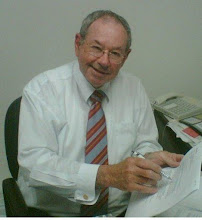
Hello - I'm Bernard Kelly, Australia's Retirement Strategiest

TODAY'S INSPIRATIONAL QUOTE:
"Our lives improve only when we take chances -- and the first and most difficult risk we can take is to be honest with ourselves."
Walter Anderson (American Football Referee, Superbowl XXXV)
CONTRIBUTING TO SUPER UNTIL WE’RE 75
In the fine print that accompanied the Rudd Government’s release of the Henry Report was the mention that employees will now be required to make compulsory contributions to superannuation until age 75.
Previously, relief came when employees reached age 70.
The implication is that the government is anticipating that many of us will be working into our 70s.
The good news is of course that you can still commence a portfolio of residential investment properties in your early 60s.
PREPARE TO WORK UNTIL YOU’RE OLD
John Beard, an Australian now working in Geneva as Director of Aging and Life Progression at the World Health Organisation, expects that governments will soon be encouraging firms to retain employees well into old age as a means to limit expenditure on hospitals and aged care facilities.
It is well documented that an active lifestyle reduces the need for medical expenses and hospital stays.
Of course, firms will also benefit from retaining their knowledge base, as well as not having to compete for (increasingly scarce) younger employees.
Already, some firms in the United States are now offering 1000 hour years to older employees. This is 55% of the hours that firms expect from younger employees, and can be taken in various packages for example over seven months or three days a week for 45 weeks.
THE NEW RETIREMENT LIFESTYLE
Your retirement will be impacted by your finances, your health, and the health of your spouse.
Assuming those fundamentals are met, here are few ways to stay active and enrich ones life after retirement. Staying active and engaged with life is an important way of adjusting to the retirement years.
Physical activity
The best way to be healthy, independent and occupied is by doing some minor physical exercise such as walking and yoga. You should participate in exercises daily such as walking wherever possible and taking the stairs instead of an elevator.
Gardening
Gardening is a great way to stay active and it is a big stress reducer. An added benefit – in addition to friendships that emerge from common interests - is being able to eat the vegetables that you grow and to give extra produce to friends and family.
Spend time with grandkids
If your grandkids are busy with homework and you have some time on your hands, why not help them with their work? Apart from homework, you can play with them, tell them stories, and take them to the park. Thus you will gain a good listener and even build a healthy relationship.
Travel
Explore Australia. Remember there is no age limit to having fun and adventure. This is the time of your life so make the best use of it. Discover new and exciting things about the world around you.
Or establish an Elderhostel where there is a strong marketplace – such as on the gem and sapphire fields in Queensland.
Volunteer
Be a volunteer in a hospital; of join a club or church group that does overseas mission work. Find out where interests are and use your skills and abilities to better the world. Making a difference in the lives of others can be very rewarding.
Career skills and teaching
Working in a job for 30 or 40 years has taught the retiree many valuable skills and knowledge that can be shared with others in the education of the youth. There is a tremendous need for experienced people from the work world to teach the workers of tomorrow and to give them experience from real life situations. There are paid jobs in the TAFE system and unpaid jobs at your local community house.
Write
Write about life experiences. There is much knowledge and wisdom that seniors have to offer to the younger generation. Many well known writers did not start writing until their later years. Maybe you will write a famous novel. How will you know unless you try? And it’s easy to sell your writings on http://www.clickbank.com/
Life Long Learning
Take a college coarse to improve your knowledge and skills sets. Then use this new knowledge to enrich your life and those around you. You may want to learn to paint, sing or dance.
Whatever you want in retirement you now have time to pursue your interests. Make this time the time of you life.
Whatever you want in retirement you now have time to pursue your interests. Make this time the time of you life.
Source: Ed Heigl executive director Crestview Senior Living writing in the “St Louis Globe-Democrat” 7 April 2010
I’M LOOKING FOR REFERRALS
I’M LOOKING FOR REFERRALS
“We are grateful that, one day, you will be using our services.
“If we prove to be exceptional, would you refer us to three of your contacts?”
I’m Bernard Kelly 0414 778 518
Australia's Retirement Strategiest™
WHAT RETIREMENT CALCULATORS DON’T TELL YOU
When you search on the phrase “retirement calculator” using Google, and you’ll be deluged with hits. Every major financial services company has an online tool to estimate how much money you need to save for retirement. But a recent study by the (American) Society of Actuaries says many popular calculators have serious flaws. These potential hazards could lead to serious miscalculations when you’re plotting your financial future.
The free online tools, as a group, had a host of problems. “These tools take a project that is fairly complex and boil it down to something simple,” says John Turner, an economist and co-author of the report. “They don’t ask you to consider a lot of important variables.”
Here are some areas where retirement calculators may be getting it wrong.
1. Pension Projections
Most retirees get the bulk of their retirement income from the government and many of the calculators annual cost-of-living adjustment (COLA), which is pegged to the Consumer Price Index.
However this adjustment is often less than the inflation rate.
2. Rate-of-Return Assumptions
Most calculators assume that you will only have superannuation – but what if you have some investments as cash in the bank? And what if the stock market surges – and then falls precipitously?
Most calculators assume a straight line rate of return forever.
3. Life Expectancy
It’s impossible to know how long you’ll live, of course. Based on average life expectancies, 65-year-old men can expect to live another 17 years, and women another 20 years.
However for a man aged 65, the probability of reaching age 90 is around one third, and for a woman aged 65, her probability of reaching age 90 is around half.
4. Housing Info
When forecasting your finances in retirement, make your best guess about how much you’ll be paying for a mortgage or rent, whether you’ll tap your home equity and any income you might receive from selling your home.
However most calculators don’t provide these options.
5. Inflation Forecasts
When it came to inflation, stick with retirement calculators allowing you to input alternative inflation scenarios, and run the numbers in a couple of ways. You never know.
6. Spouses
If you’re married, calculate retirement income needs for you and your spouse together and separately, using different life expectancy scenarios. This will help ensure that the one who lives longer won’t run out of cash. “Doing the ‘what-ifs’ can help you see just how differently things can turn out,” says Turner.
7. Hospital and Medical Expenses.
As we age, our bodies deteriorate. Most calculators ignore this financial impact of this reality.
Acknowledgements Mark Miller, appearing on CBS' Moneywatch.com
THE TOP FIVE RETIREMENT MYTHS:
Australia's Retirement Strategiest™
WHAT RETIREMENT CALCULATORS DON’T TELL YOU
When you search on the phrase “retirement calculator” using Google, and you’ll be deluged with hits. Every major financial services company has an online tool to estimate how much money you need to save for retirement. But a recent study by the (American) Society of Actuaries says many popular calculators have serious flaws. These potential hazards could lead to serious miscalculations when you’re plotting your financial future.
The free online tools, as a group, had a host of problems. “These tools take a project that is fairly complex and boil it down to something simple,” says John Turner, an economist and co-author of the report. “They don’t ask you to consider a lot of important variables.”
Here are some areas where retirement calculators may be getting it wrong.
1. Pension Projections
Most retirees get the bulk of their retirement income from the government and many of the calculators annual cost-of-living adjustment (COLA), which is pegged to the Consumer Price Index.
However this adjustment is often less than the inflation rate.
2. Rate-of-Return Assumptions
Most calculators assume that you will only have superannuation – but what if you have some investments as cash in the bank? And what if the stock market surges – and then falls precipitously?
Most calculators assume a straight line rate of return forever.
3. Life Expectancy
It’s impossible to know how long you’ll live, of course. Based on average life expectancies, 65-year-old men can expect to live another 17 years, and women another 20 years.
However for a man aged 65, the probability of reaching age 90 is around one third, and for a woman aged 65, her probability of reaching age 90 is around half.
4. Housing Info
When forecasting your finances in retirement, make your best guess about how much you’ll be paying for a mortgage or rent, whether you’ll tap your home equity and any income you might receive from selling your home.
However most calculators don’t provide these options.
5. Inflation Forecasts
When it came to inflation, stick with retirement calculators allowing you to input alternative inflation scenarios, and run the numbers in a couple of ways. You never know.
6. Spouses
If you’re married, calculate retirement income needs for you and your spouse together and separately, using different life expectancy scenarios. This will help ensure that the one who lives longer won’t run out of cash. “Doing the ‘what-ifs’ can help you see just how differently things can turn out,” says Turner.
7. Hospital and Medical Expenses.
As we age, our bodies deteriorate. Most calculators ignore this financial impact of this reality.
Acknowledgements Mark Miller, appearing on CBS' Moneywatch.com
THE TOP FIVE RETIREMENT MYTHS:
1. You'll only need 70-80 percent of your pre-retirement income.
Hopefully the kids have left home and you don’t have a mortgage on your family home. But even if you’re in the 50% who fit this scenario, other expenses can take their place, such as travel – initially – and then later health and medical expenses.
2. When you retire, you'll be in a lower tax bracket.
Maybe, and maybe not. When one third of the population is retired, my prediction is that the government will need to find other ways to put their hands into our pockets.
3. You can always just keep working.
3. You can always just keep working.
This presumes that your body doesn’t wear out and also that the job market for seniors remains healthy.
4. The stock market will save you.
4. The stock market will save you.
The stock market does go up over time, but it can also dip and adversely impact on your superannuation
5 There's always the pension
There will always be a pension – for only for those who would otherwise be destitute.
But in future the government won’t be able to pay everyone the pension, so if you’ve had a good education, they might say, at some stage, “well, you many opportunities to look after yourself”. So don’t rely on big brother being there for you.
But in future the government won’t be able to pay everyone the pension, so if you’ve had a good education, they might say, at some stage, “well, you many opportunities to look after yourself”. So don’t rely on big brother being there for you.
Acknowledgements - Beth Flynn: VP, Retirement and Client Experience Charles Schwab & Co., Inc.
HOW TO FIND WORK AFTER 50
I saw recently a review of “The Return of the Boomers” written by François Humbert, published in France by Maxima.
The one solid suggestion that I saw was to look for employment with SMEs (Small & Medium Enterprises) which are too small to have a Human Resources department.
The boss is typically busy, and hiring is just another hassle for him. So the easy route for him is to look for competent people who can make a contribution immediately.
PROFITABLE HOBBY
I was reminded recently that if you have some basic product knowledge (whatever product you are familiar with), an empty garage, a basic website and hey presto you too can have a profitable hobby.
I had to buy some rope – for ten year old girls to use as a skipping rope at our street party.
So I found a rope shop on the internet, and the owner obviously knew a lot more about rope that I did, so I said I’d take his recommendation and where should I come and collect it?
The address of his shop was in fact, his double garage, and in conversation he mentioned that many people could do what he’s doing. For example, he said, anyone who has been in the Boy Scouts, anyone who has done rock climbing, anyone who has been a truckie, anyone who has ever been sailing. If you have some base knowledge of rope, he said, you can readily build on that.
Incidentally I was interested to learn that the big market for rope apparently is in industry and mining – in fact anywhere they used to use wire cables. Modern rope is made from chemicals, and is stronger than wire cables, but more importantly, it will not whiplash should it break - so it’s far safer.
But back to your profitable hobby: all you need is some basic product knowledge (whatever product you are familiar with), your empty garage, a basic website and hey presto you too will have a profitable hobby.
If you need a low cost, but fully functional, website, go to my other site www.valuewebsites.info (This online store services my private clients who need a low cost, but fully functional website for their profitable hobby.)
PAY FOR A CONSULTATION
Some people want to pay me for this service.
Feel free to go to my membership site www.retirementstrategies.net.au and pay $110 for a full membership
HOST A WORKPLACE SEMINAR
PROFITABLE HOBBY
I was reminded recently that if you have some basic product knowledge (whatever product you are familiar with), an empty garage, a basic website and hey presto you too can have a profitable hobby.
I had to buy some rope – for ten year old girls to use as a skipping rope at our street party.
So I found a rope shop on the internet, and the owner obviously knew a lot more about rope that I did, so I said I’d take his recommendation and where should I come and collect it?
The address of his shop was in fact, his double garage, and in conversation he mentioned that many people could do what he’s doing. For example, he said, anyone who has been in the Boy Scouts, anyone who has done rock climbing, anyone who has been a truckie, anyone who has ever been sailing. If you have some base knowledge of rope, he said, you can readily build on that.
Incidentally I was interested to learn that the big market for rope apparently is in industry and mining – in fact anywhere they used to use wire cables. Modern rope is made from chemicals, and is stronger than wire cables, but more importantly, it will not whiplash should it break - so it’s far safer.
But back to your profitable hobby: all you need is some basic product knowledge (whatever product you are familiar with), your empty garage, a basic website and hey presto you too will have a profitable hobby.
If you need a low cost, but fully functional, website, go to my other site www.valuewebsites.info (This online store services my private clients who need a low cost, but fully functional website for their profitable hobby.)
PAY FOR A CONSULTATION
Some people want to pay me for this service.
Feel free to go to my membership site www.retirementstrategies.net.au and pay $110 for a full membership
HOST A WORKPLACE SEMINAR
You probably know many people who need my experience and expertise right now.
Here’s the deal – you invite a few people to a lunch or after-work seminar, and I’ll present Retirement Strategies for Employees.
I’ll pay you $150 for your expenses, and a further $1000 for every participant who has me share an investment property with them.
About Bernard Kelly:
About Bernard Kelly:
Bernard Kelly BEcon MBA CRPC Australia’s Retirement Strategist, is a highly sought-after advisor, retirement authority, thought-leader, author and radio commentator because he makes the complicated and mundane topics of investing and retirement fun! Bernard has over 20 years experience providing families with financial thought. He is the author of Live Your Dreams in Retirement, Property Investing for Couples, Goolwa by Breakfast and Raising Decent Kids into Substantial Wealth and publishes a fortnightly newsletter that reaches thousands of subscribers worldwide.
19 Prospect Street, Box Hill 3128 Australia. Tel 61-3-9899 8577 mobile 0414 778 518
* note that I am not a Financial Planner. These comments are only general expectations of what may happen to property in the years ahead. However, unlike Financial Planners, I do offer a Fiducary Relationship to my private clients.
Labels: Bernard Kelly; property; income in retirement; investment property; real esate invesments; retire, retirement, work from home
posted by Bernard Kelly @ 4:48 pm
0 comments


.JPG)