Wednesday, September 01, 2010

Retirement Strategies 1 September 2010


an off-the-plan 4 bedroom family home in a growth corridor will attract the ideal tenant and provide maximum financial benefits for the investor (right)


HOUSING TO REMAIN RESILIANT – ANZ BANK

As we’re looking ahead 10-15 years with residential investment properties – to have something extra tucked aside when we finally get around to “retirement” (whatever that will mean then) – you should pay some attention to the long term view for the housing market available from the major banks.

In the August issue of the ANZ Bank’s “Australian Property Outlook”, they expect that dwelling construction this year and next year will be around 160,000, well short of the 200,000+ needed each year to eliminate the increasing shortfall.

The compounding impact of being 40,000 dwellings short each year will mean that the issue will become one of availability rather than affordability, and house prices and rents will doubtlessly rise during the next five years.

“It’s a good time to be a developer or owner,” said Paul Braddick, head of property and financial system research.

The basic problem is on the supply side, with not enough land being released for new developments.


HOUSING TO REMAIN RESILIANT – WESTPAC

Matthew Hassan, senior economist with Westpac, writing in “The Australian Financial Review” (31 August) believes house price rises will continue.

The starting point for this analysis is that current demand is around 180,000 new dwellings each year – to satisfy natural population increase and immigration. But for some time now we have been building only 150,000 annually, he says.

Pent-up demand could be eliminated in three years if dwelling construction increased by one third – from 150,000 to 225,000 – says Hassan. But this is virtually impossible, he says, because there isn’t enough approved land available for subdivision.

Alternatively, if immigration dropped back to historical levels (around 100,000 arrivals) compared to 300,000 last year, demand for new housing would drop back to around 140,000 dwellings. However the backlog is already so large that it would take five or six years for a balance to be established.

But immigration won’t be falling back any time soon – there is a massive shortage of skilled labour domestically, and demand continues to surge for higher education from China and India.

“The current undersupply,” he writes, “is the result of seven years of under-building and surging population growth, and in all probability will take a similar length of time to correct”.


BANK RESTRICTS LOAN MATURITY TO AGE 75

With the implementation of the National Consumer Credit Reform on 1 July, banks are now required to assess the borrower’s capacity to repay.

For property investors in late career, just starting to build their portfolio, this has major implications.

Already one of the big four banks has issued guidelines that require re-assessment should the maturity of the loan be out beyond the borrower’s 75th birthday.

So if you’re aged 55 and seek a 20 year interest only loan, you shouldn’t have a problem.

However if your age is 65, you may be limited to a 10 years principal and interest loan.

Compounding this issue is another related “repayment capacity” test i.e. if you have to totally repay a loan in fewer years, the monthly repayments will be higher, so the bank will not lend you as much because your capacity to make larger repayments will be reduced.

• All this means that you shouldn’t delay in starting a portfolio of residential investment properties if you are planning for 20-25 years of comfortable retirement.


YOU DID AS YOU WERE TOLD …

… but no one told you about planning for retirement.

When we were in our thirties, retirement wasn’t on our horizon. And it still isn’t for that age group.

Why?

Who wants to be told that you must save 20% of your income just for retirement when you’re in your 30s, with two children, with a family income of $120,000?

For the majority, this is just not realistic. You would be eating cat food for years in order to eat caviar later.

Fortunately, when you get into your fifties it’s not too late to start.

What you need is to implement my very successful investment strategy, plus deferring any thought of early retirement, and thirdly convert whatever hobby you have into a “profitable hobby”.

If you want to explore your options how to tuck something extra aside for retirement, contact me – Bernard Kelly – anytime.

My email is admin@retirelaughing.com

ASSET ALLOCIATION IS VITAL

As we are all locked in the compulsory 9% superannuation savings scheme – which is basically all invested in the share market – we need to diversify and lower our risk exposure to one such asset class.

Which is one of the reasons why I recommend residential investment properties, carefully selected for their ability to attract the ideal tenant, proximity to lots of jobs, where the growth is expected to be fastest, where rents are higher and where land taxes are the lowest.

The stock market, we know, can lose up to half its value – which could be disastrous if that’s when we are leaving paid employment and commencing your retirement.

Investment property may dip from time to time – but fortunately never loses half its value.

So be prudent – don’t put all of your eggs into the stock market.

Rather, tuck something extra aside through the very successful investment strategy that I share with my private clients.


“THINK AND GROW RICH” published 1937

As a teenager I read “Think and Grow Rich” by Napoleon Hill, published in 1937.

Now, 50 years later, I have returned to its wisdom.

And one of Hill’s key findings (you’ll remember that he spent years studying the lives of successful men) was that they are able to reach decisions rapidly, and rarely if ever changed their mind.

On the other hand, the least successful took forever to make a decision, and then too frequently changed their mind very soon thereafter.

As you plan for your retirement, are you able to make a rapid decision? If the answer is yes, I have the solution if you don’t have enough for 20-25 years of comfortable retirement.

Contact me – Bernard Kelly – anytime on email admin@retirelaughing.com

If you want proof that my strategy works, go read the testimonials on www.retirementstrategies.net.au

I’m Australia’s Retirement Strategist®


SUPER RETURNS 1997-2009 – A MERE 3.0% pa

Stephen Long - Economics Correspondent for the Australian Broadcasting Corporation- published his analysis of the superannuation system on 5 August 2010.

Based on statistics published by the Australian Prudential Regulation Authority keeps statistics his conclusion is that the net annual compound return is a mere 3 per cent.

That's barely ahead of the inflation rate over that time, which averaged 2.8 per cent.

Over the last decade the system-wide returns were below inflation, which averaged 3.2 per cent.

Long says “Think about it. Australians have, in effect, had a proportion of their wages compulsorily acquired and put into a retirement savings system that has seen their money stagnate over a dozen years and go backwards over the past 10.”

This raises a fundamental question: is this the best way to provide for workers in their retirement?

The answer of course is “NO”.

If you want my assistance in helping you explore options for a better investment strategy, contact me – Bernard Kelly – anytime on 0414 778 518 or email admin@retirelaughing.com

HALF OF US WORKERS EXPECT FINANCIAL DIFFICULTIES IN RETIREMENT

NEW YORK, Aug. 9 (UPI) -- Four out of 10 U.S. adults who are not yet retired say they believe they will outlive their retirement savings, a survey indicates.

The results show 48 percent of those not yet retired say they will not have enough money to maintain their current lifestyle in retirement.

Fifty-three percent who are retired say they are concerned about their current financial situation.

The situation in Australia may be very similar.

If you have any concerns about having enough for 20-25 years of comfortable retirement, contact me – Bernard Kelly – anytime.

I’ll PAY YOU $5,000 …

… for each successful referral that you generate.

My practice helps late career couples plan for 20-25 years of comfortable retirement, by addressing the elements of personal health, financial security, family & friends and a zest for living.

I spread my marketing budget over various media, and it costs me around $5,000 to develop a new relationship. So I’m willing to pay you that $5,000.

Feel free to find out more about joining me as a Referral Agent. (We could have a lot of fun together. And you could make a lot of money - this year, next year, every year.) Your role is simply to generate leads – I’ll do the rest.

Let me know if you want to know more – for example, when will you get paid? where is the deepest pool of prospects?

Go to Facebook. Search for the page “Referral Team – RetireLaughing” and click the “Like” button

I’m Bernard Kelly - Australia’s Retirement Strategist®,


LET’S MEET - MELBOURNE OR PERTH

I’ll be at the Melbourne Retirement & Lifestyle Expo at the Caulfield Racecourse 10-12 September.

And also at the Leisure & Lifestyle Expo in Perth (Claremont Showgrounds) 29-31 October.

I look forward to meeting you if you can make either event.


PAY FOR A CONSULTATION

Some kind people want to pay me for this service.

Feel free to go to my membership site www.retirementstrategies.net.au and pay $110 for a full membership


About Bernard Kelly:

Bernard Kelly BEcon MBA CRPC Australia’s Retirement Strategist®, is a highly sought-after advisor, retirement authority, thought-leader, author and radio commentator because he makes the complicated and mundane topics of investing and retirement fun! Bernard has over 20 years experience providing families with financial thought. He is the author of Live Your Dreams in Retirement, Property Investing for Couples, Goolwa by Breakfast and Raising Decent Kids into Substantial Wealth and publishes a fortnightly newsletter that reaches thousands of subscribers worldwide.


19 Prospect Street, Box Hill 3128 Australia. Tel 61-3-9899 8577 mobile 0414 778 518


Labels: , , , ,

Friday, June 11, 2010

Retirement Strategies 15 June 2010

Hello - I'm Bernard Kelly, Australia's Retirement Strategiest


TODAY'S INSPIRATIONAL QUOTE:

"Our lives improve only when we take chances -- and the first and most difficult risk we can take is to be honest with ourselves."

Walter Anderson (American Football Referee, Superbowl XXXV)


CONTRIBUTING TO SUPER UNTIL WE’RE 75

In the fine print that accompanied the Rudd Government’s release of the Henry Report was the mention that employees will now be required to make compulsory contributions to superannuation until age 75.

Previously, relief came when employees reached age 70.

The implication is that the government is anticipating that many of us will be working into our 70s.

The good news is of course that you can still commence a portfolio of residential investment properties in your early 60s.


PREPARE TO WORK UNTIL YOU’RE OLD


John Beard, an Australian now working in Geneva as Director of Aging and Life Progression at the World Health Organisation, expects that governments will soon be encouraging firms to retain employees well into old age as a means to limit expenditure on hospitals and aged care facilities.

It is well documented that an active lifestyle reduces the need for medical expenses and hospital stays.

Of course, firms will also benefit from retaining their knowledge base, as well as not having to compete for (increasingly scarce) younger employees.

Already, some firms in the United States are now offering 1000 hour years to older employees. This is 55% of the hours that firms expect from younger employees, and can be taken in various packages for example over seven months or three days a week for 45 weeks.


THE NEW RETIREMENT LIFESTYLE

Your retirement will be impacted by your finances, your health, and the health of your spouse.
Assuming those fundamentals are met, here are few ways to stay active and enrich ones life after retirement. Staying active and engaged with life is an important way of adjusting to the retirement years.

Physical activity
The best way to be healthy, independent and occupied is by doing some minor physical exercise such as walking and yoga. You should participate in exercises daily such as walking wherever possible and taking the stairs instead of an elevator.
Gardening
Gardening is a great way to stay active and it is a big stress reducer. An added benefit – in addition to friendships that emerge from common interests - is being able to eat the vegetables that you grow and to give extra produce to friends and family.
Spend time with grandkids
If your grandkids are busy with homework and you have some time on your hands, why not help them with their work? Apart from homework, you can play with them, tell them stories, and take them to the park. Thus you will gain a good listener and even build a healthy relationship.
Travel
Explore Australia. Remember there is no age limit to having fun and adventure. This is the time of your life so make the best use of it. Discover new and exciting things about the world around you.
Or establish an Elderhostel where there is a strong marketplace – such as on the gem and sapphire fields in Queensland.
Volunteer
Be a volunteer in a hospital; of join a club or church group that does overseas mission work. Find out where interests are and use your skills and abilities to better the world. Making a difference in the lives of others can be very rewarding.
Career skills and teaching
Working in a job for 30 or 40 years has taught the retiree many valuable skills and knowledge that can be shared with others in the education of the youth. There is a tremendous need for experienced people from the work world to teach the workers of tomorrow and to give them experience from real life situations. There are paid jobs in the TAFE system and unpaid jobs at your local community house.
Write
Write about life experiences. There is much knowledge and wisdom that seniors have to offer to the younger generation. Many well known writers did not start writing until their later years. Maybe you will write a famous novel. How will you know unless you try? And it’s easy to sell your writings on http://www.clickbank.com/
Life Long Learning
Take a college coarse to improve your knowledge and skills sets. Then use this new knowledge to enrich your life and those around you. You may want to learn to paint, sing or dance.
Whatever you want in retirement you now have time to pursue your interests. Make this time the time of you life.
Source: Ed Heigl executive director Crestview Senior Living writing in the “St Louis Globe-Democrat” 7 April 2010

I’M LOOKING FOR REFERRALS

“We are grateful that, one day, you will be using our services.
“If we prove to be exceptional, would you refer us to three of your contacts?”
I’m Bernard Kelly 0414 778 518
Australia's Retirement Strategiest™


WHAT RETIREMENT CALCULATORS DON’T TELL YOU

When you search on the phrase “retirement calculator” using Google, and you’ll be deluged with hits. Every major financial services company has an online tool to estimate how much money you need to save for retirement. But a recent study by the (American) Society of Actuaries says many popular calculators have serious flaws. These potential hazards could lead to serious miscalculations when you’re plotting your financial future.

The free online tools, as a group, had a host of problems. “These tools take a project that is fairly complex and boil it down to something simple,” says John Turner, an economist and co-author of the report. “They don’t ask you to consider a lot of important variables.”

Here are some areas where retirement calculators may be getting it wrong.

1. Pension Projections

Most retirees get the bulk of their retirement income from the government and many of the calculators annual cost-of-living adjustment (COLA), which is pegged to the Consumer Price Index.

However this adjustment is often less than the inflation rate.

2. Rate-of-Return Assumptions

Most calculators assume that you will only have superannuation – but what if you have some investments as cash in the bank? And what if the stock market surges – and then falls precipitously?

Most calculators assume a straight line rate of return forever.

3. Life Expectancy

It’s impossible to know how long you’ll live, of course. Based on average life expectancies, 65-year-old men can expect to live another 17 years, and women another 20 years.

However for a man aged 65, the probability of reaching age 90 is around one third, and for a woman aged 65, her probability of reaching age 90 is around half.

4. Housing Info

When forecasting your finances in retirement, make your best guess about how much you’ll be paying for a mortgage or rent, whether you’ll tap your home equity and any income you might receive from selling your home.

However most calculators don’t provide these options.

5. Inflation Forecasts

When it came to inflation, stick with retirement calculators allowing you to input alternative inflation scenarios, and run the numbers in a couple of ways. You never know.

6. Spouses

If you’re married, calculate retirement income needs for you and your spouse together and separately, using different life expectancy scenarios. This will help ensure that the one who lives longer won’t run out of cash. “Doing the ‘what-ifs’ can help you see just how differently things can turn out,” says Turner.

7. Hospital and Medical Expenses.

As we age, our bodies deteriorate. Most calculators ignore this financial impact of this reality.


Acknowledgements Mark Miller, appearing on CBS' Moneywatch.com

THE TOP FIVE RETIREMENT MYTHS:

1. You'll only need 70-80 percent of your pre-retirement income.

Hopefully the kids have left home and you don’t have a mortgage on your family home. But even if you’re in the 50% who fit this scenario, other expenses can take their place, such as travel – initially – and then later health and medical expenses.

2. When you retire, you'll be in a lower tax bracket.
Maybe, and maybe not. When one third of the population is retired, my prediction is that the government will need to find other ways to put their hands into our pockets.

3. You can always just keep working.
This presumes that your body doesn’t wear out and also that the job market for seniors remains healthy.

4. The stock market will save you.
The stock market does go up over time, but it can also dip and adversely impact on your superannuation
5 There's always the pension
There will always be a pension – for only for those who would otherwise be destitute.

But in future the government won’t be able to pay everyone the pension, so if you’ve had a good education, they might say, at some stage, “well, you many opportunities to look after yourself”. So don’t rely on big brother being there for you.

Acknowledgements - Beth Flynn: VP, Retirement and Client Experience Charles Schwab & Co., Inc.

HOW TO FIND WORK AFTER 50

I saw recently a review of “The Return of the Boomers” written by François Humbert, published in France by Maxima.

The one solid suggestion that I saw was to look for employment with SMEs (Small & Medium Enterprises) which are too small to have a Human Resources department.
The boss is typically busy, and hiring is just another hassle for him. So the easy route for him is to look for competent people who can make a contribution immediately.

PROFITABLE HOBBY

I was reminded recently that if you have some basic product knowledge (whatever product you are familiar with), an empty garage, a basic website and hey presto you too can have a profitable hobby.

I had to buy some rope – for ten year old girls to use as a skipping rope at our street party.

So I found a rope shop on the internet, and the owner obviously knew a lot more about rope that I did, so I said I’d take his recommendation and where should I come and collect it?

The address of his shop was in fact, his double garage, and in conversation he mentioned that many people could do what he’s doing. For example, he said, anyone who has been in the Boy Scouts, anyone who has done rock climbing, anyone who has been a truckie, anyone who has ever been sailing. If you have some base knowledge of rope, he said, you can readily build on that.

Incidentally I was interested to learn that the big market for rope apparently is in industry and mining – in fact anywhere they used to use wire cables. Modern rope is made from chemicals, and is stronger than wire cables, but more importantly, it will not whiplash should it break - so it’s far safer.

But back to your profitable hobby: all you need is some basic product knowledge (whatever product you are familiar with), your empty garage, a basic website and hey presto you too will have a profitable hobby.

If you need a low cost, but fully functional, website, go to my other site www.valuewebsites.info (This online store services my private clients who need a low cost, but fully functional website for their profitable hobby.)


PAY FOR A CONSULTATION

Some people want to pay me for this service.

Feel free to go to my membership site www.retirementstrategies.net.au and pay $110 for a full membership

HOST A WORKPLACE SEMINAR

You probably know many people who need my experience and expertise right now.
Here’s the deal – you invite a few people to a lunch or after-work seminar, and I’ll present Retirement Strategies for Employees.
I’ll pay you $150 for your expenses, and a further $1000 for every participant who has me share an investment property with them.

About Bernard Kelly:
Bernard Kelly BEcon MBA CRPC Australia’s Retirement Strategist, is a highly sought-after advisor, retirement authority, thought-leader, author and radio commentator because he makes the complicated and mundane topics of investing and retirement fun! Bernard has over 20 years experience providing families with financial thought. He is the author of Live Your Dreams in Retirement, Property Investing for Couples, Goolwa by Breakfast and Raising Decent Kids into Substantial Wealth and publishes a fortnightly newsletter that reaches thousands of subscribers worldwide.

19 Prospect Street, Box Hill 3128 Australia. Tel 61-3-9899 8577 mobile 0414 778 518

* note that I am not a Financial Planner. These comments are only general expectations of what may happen to property in the years ahead. However, unlike Financial Planners, I do offer a Fiducary Relationship to my private clients.

Labels: , ,

Friday, August 14, 2009

Lifestyle Newsletter 15 August 2009


COMFORTABLE LIFESTYLE” NOW COSTS $50,770

The latest results for the Westpac-ASFA Retirement Standard are available.

In the March quarter 2009, a retired couple will now need $50,770 pa for a “comfortable” lifestyle.

A “modest” lifestyle will cost $27,547 – only slightly more than the pension.

If you would like me to help you explore your options to achieve – or exceed – this “comfortable” lifestyle, contact me anytime.

My email is
admin@retirelaughing.com and my mobile is 0414 778 518.


PROFITABLE HOBBY - MAKING SWINGS


If you want some stimulation where your hobby business can take you, you’ll definitely find a searchlight in this case study.


Barbara Clack lives on a large rural block in the hills just inland from the beach resort of Noosa, in Australia.

In 1993, she started making swings and even today she has only two part-time employees. So it’s not a massive operation, by any stretch of the imagination, even after 16 years. It’s just a very sweet business.

Initially Barbara did everything herself – buying the fabrics, timber and cords then undertaking the actual manufacture as well as finding retail outlets to supply to. But gradually, once she had established sources for inputs and had found shops that would take her swings, and she became familiar with manufacturing process, a process system emerged, and she has continued to improve on that, “one percent each time”.

The name of her business is Swingz n Thingz and the website is swingz.com.au

Barbara has never had a physical shop – and today of course it’s all done online. Her site is a stunningly beautiful and fully functional e-commerce business.

The products are basically hanging chairs and hammocks - for use at home on the verandah, for camping holidays, fishing, or sailing on your boat.

Starting with one product, the range has now expanded over the years to 12 different product categories, such as kids’ swings or Mexican hammocks. Prices range up to around $300.

When Barbara started her “hobby business” the pricing model was 25% materials 25% for waste 25% admin and marketing and 25% profit. As there was little competition, and her outlets were often in holiday destinations, she was able to earn a handsome profit on each item.

The low volume of unit sales was the problem back then. But as the wastage became less, her profits increased without having to increase prices.

Now of course selling on the internet has allowed her to increase her sales volume considerably and of course selling into a leisure market means that price is not so much of an issue with customers.

Retail sales are generated off the internet (via Google Adwords), from small advertisements placed down the back in gardening magazines, and of course Barbara continues to wholesale to high street shops.


TEN RETIREMENT ISSUES TO CONSIDER

No matter how close or far away you are from retirement - you need to take action now...RIGHT AWAY...


It’s not too late to act! And I am offering Help for your retirement - and I am talking about FREE help - is just a mouse-click away


The issues that you should to be thinking about – in additional to your financial needs - are

1. Health issues

2. Legal issues

3. Relationship issues

4. How to make productive use of time

5. Apprehensions & Fear about aging

6. Life Purpose issues

7. Life Balance

8. Relocation issues & Housing issues

9. Safety issues

Let me know if I can help. I’m Bernard Kelly and my email is
admin@retirelaughing.com


EVERYONE IS WORKING LONGER

According to data from the Organisation for Economic Co-operation and Development, there is growing acceptance of longer working lives in the industrialised world, with rising workforce participation rates among older people in many countries, even without legislation.
In the US, those over 65 in the workforce in 2007 were 15.5%, up from 12.5% in 2000.

In Australia, 8.7% of those above 65 were working in 2007, up from 6.1% in 2000.

For all OECD countries, the figures were 10.5% in 2000 and 11.5% in 2007.

Source: “Financial Times” London 25 May 2009


KEEP YOUR SUPER BENEFICIARIES UPDATED

We all focus on accumulating money for our retirement as a way to help enjoy a long and financially comfortable life.

Much less thought is put into what becomes of those assets after your “estate event” occurs.This is particularly true of superannuation, as we generally don’t pay much attention to it.

When you open an individual superannuation account, you should have completed a designated beneficiary form.

The most common beneficiaries are spouses, children or other family members – however when you went into your first superannuation, it is unlikely that you had a spouse or children at that time and you probably don’t even remember the names you listed on the designated beneficiary form.


Many people assume their current will provides all of the necessary instructions about the disposition of assets at death, including those in your super fund.


But in fact, the designated beneficiary forms filed with your super accounts will take precedence over your will.


The reason is that a retirement account is not considered a part of an estate.


Given that a lot of things change in life, you’ll probably need to go back to your super fund and nominate (given your relationships today) who you want you super to pass to.

Labels: , ,

Friday, May 15, 2009

Lifestyle Newsletter 15 May 2009


PROFITABLE HOBBY – BECOME A WEBHOST


My friend CH retired nine years ago, after a career as a solicitor.

After two years he had become bored, but had started to go to computer swap meets, held on Sundays in a local hall, really only to fill in the day. He had really no knowledge of computers before that (but he did have a logical mind).

It gradually dawned on him that every website had to be “hosted” and realised it was a fairly easy to establish one himself – for his own hobby websites and for a few friends.

Not needing an income, he priced his services very low, and selected a name that would reflect this pricing, and found he was attracting clients who needed to host multiple sites.

Now – after only seven years – he has 7,000 clients but because everything is automated, it’s still a one person “hobby”.

But you do the maths. If each client pays him say $100 pa, that’s a lot of revenue for a one person hobby with little overheads.

His URL is www.budgethost.co.nz

WHY PENSION AGE IS BEING LIFTED TO 67

The pension age in Australia is being progressively lifted to 67.

While no detailed rationale is widely available, an annual report published by the US government in May shows what could happen there.

Because of the increasing cost of medical procedures and an aging population, it has warned that the American health insurance plan for the elderly (known as Medicare) will be insolvent by 2017 - two years earlier than predicted in 2008.

A separate fund for Social Security, their government’s pension plan, will be exhausted by 2037 - four years earlier than reported last year.

The demographics in Australia are broadly similar. Which is why we all need to tuck something extra aside come close to 20-25 years of dignified retirement.

Let me know if I can help you explore your options. My email is
admin@retirelaughing.com

RETIREMENT TAKES A LOT OF MONEY

AARP has just released a retirement planning video “Mission Retirement” to show Americans the importance of saving for the future.


Just about everyone’s mission is to retire comfortably some day. It isn’t impossible, but it will take work.

According to AARP, there are big holes in the security net of government welfare, therefore, it’s everyone’s responsibility to start early. In fact, the video mentions that to have an adequate nest egg you need to save 15% of your income each year for 40 years!

Go to www.aarp.org/finance

RETIREMENT OFTEN HAPPENS UNEXPECTEDLY

Retrenchment, a health problem, or the illness of a relative can derail
retirement plans in an instant.

This new survey of 1,200 adults between ages 40 and 79 found that the number of seniors who need or want to work during the traditional retirement years is rapidly growing, AARP Financial Inc. and Boston Research Group found.

About 433,000 unemployed Americans age 65 and older were actively seeking employment in February, more than twice as many as in November 2007, just before the recession began.

“This is a daunting economy for older people. A lot of older people are coming to see us that are scared or bewildered,” says Cynthia Metzler, president and CEO of Experience Works, a nonprofit organization that helps older people retrain for new jobs. “We have people who are in their 80s who are taking on new jobs.”

If you want me to help you explore your options – now – to enjoy your eventual retirement, contact me Bernard Kelly anytime. My email is admin@retirelaughing.com

RETIREMENT IQ TEST

The formula for a financially successful retirement used to be straightforward: Work for decades for one employer and then live happily ever after on the pension and whatever personal savings you were able to amass.


So the amount of savings was important but not critical.

Today, with superannuation vanishing and an economic crisis withering savings, it’s increasingly up to individuals to take charge of their finances to fund retirements that can stretch for up to 30 years because of longer lifespans.

Is your retirement IQ up to the challenge?

Take the test and find out. (Answers at bottom):

1. What percentage of your savings can you withdraw annually in retirement without risk of running out of money?
(a) 3 percent (b) 4 percent (c) 7 percent (d) 10 percent

2. Approximately what percentage of pre-retirement income is generally needed to maintain a person’s current lifestyle in retirement?
(a) 45 to 60 percent (b) 60 to 75 percent (c) 75 to 99 percent (d) 100 percent or more

3. Working full-time for three years past one’s anticipated retirement date and continuing to save 15 percent of salary could raise annual retirement income by how much?
(a) 7 percent (b) 12 percent (c) 17 percent (d) 22 percent

4. At what age will most of today’s workers be eligible for full pension retirement benefits?
(a) 62 or 63 (b) 64 or 65 (c) 66 or 67 (d) 70

5. What is the amount in a superannuation fund for the typical person aged 60 retiring today
(a) $87,000 (b) $147,000 (c) $247,000

6. The number of workers age 65 and over is expected to grow by how much over the next decade?
(a) More than 20 percent (b) More than 40 percent (c) More than 60 percent (d) More than 80 percent

7. What percent of homeowners age 50 to 65 plan to use home equity to finance ordinary living expenses in retirement?
(a) 6 percent (b) 10 percent (c) 20 percent (d) 50 percent

8. A job retrenchment in one’s 50s or 60s typically reduces total household wealth by what percent?
(a) 11 percent for married couples and 23 percent for single people (b) 16 percent for married couples and 28 percent for single people (c) 21 percent for married couples and 33 percent for single people (d) 31 percent for married couples and 43 percent for single people
___
ANSWERS:
1. (b)
2. probably (c) as it’s best to plan for the high side since health and medical costs are impossible to predict.
3. (d)
4. (b) if you retire today but it will soon be (c)
5. (a)
6. (d)
7. (a)
8. (c)

Acknowledgements: Star-Telegram.com 6 April 2009

Labels: , , , , , , ,

Friday, May 01, 2009

Product Newsletter 1 May 2009

The beauty of property investing is that if this house has a market value today of say $400,000, you can reasonably expect that this value should double in 7-10 years. And if it only costs an investor $10,000 out-of-pocket, then the payoff is $390,000. Yippee!

FIXED INTEREST RATES MOVING UP

The bottom of the interest rate cycle has been reached.

While the cash rates are still expected to drop slightly over the next few months, the banks commenced the rise in fixed rates loans in the week ending Friday 24 April.

If you still haven’t locked in your facilities, don’t delay any longer.


INVESTORS’ CLUB - 14% OF TAXPAYERS


The Australian Taxation Office, in its report Taxation Statistics 2006-07, says that 13.6% of personal taxpayers own an investment property

So you are a member of an exclusive club, and investors collectively own one third of all housing accommodation.

There are 11.8 million taxpayers, so the membership of your club totals 1,600,000.

However many investors are just starting out, as only 17.5% of club members own more that one investment property.


RETIREMENT CONFIDENCE AT ALL TIME LOW

In the USA, workers and retirees have simply lost confidence in their ability to either fund a comfortable retirement or enjoy a financially secure retirement, according to the Employee Benefit Research Institute's 19th annual retirement confidence survey released in April.

Only 13% of those in work say they are "very confident" about having enough money for retirement, according to the survey. That's the lowest response since 1993, and half of the 27% response in 2007 -- just two years ago.

And almost half - 44% of all employees - are either "not at all" or "not too" confident about having a secure retirement.

Of those already retired, only 20% are very confident about having a financially secure retirement.

If you want help to explore options to avoid this nasty situation, contact me – Bernard Kelly – anytime. My email is admin@retirelaughing.com


HOUSING IS RESILIENT

Here are three paragraphs in a recent speech by Rory Robertson (Macquarie Bank's interest rate strategist) that might surprise you:"Between June 1990 and June 1992, full-time employment fell by 7%, and then took a full three years to get back to where it started. So, how far did home prices fall?

Actually, they didn't. Average house prices across Australia's state capitals rose - not fell - by about 2% per annum in nominal terms as that early-1990s recession and jobs disaster unfolded."It turns out that the downward pressure on home prices from shrinking employment in the early-1990s recession was more than offset by upward pressure on home prices from the halving of mortgage rates, from a record 17% in 1989 to 8.75% in 2003."I have no idea if average Australian house prices will fall somewhat or rise over the next five years.

“But those with their eyes wide open can see that sharply lower mortgage rates this time around - lower than most Australian home buyers ever dared to dream - already are having a strongly supportive effect on housing markets."

If you would like me – Bernard Kelly - to help you explore options to provide for your retirement via an investment property portfolio, contact me anytime. My email is admin@retirelaughing.com

Labels: , , , , , , ,

Friday, March 13, 2009

LIFESTYLE NEWSLETTER 15 March 2009


TRY YOUR RETIREMENT INCOME NOW


If you are saying that you will be able to live with less money in your retirement, try to live off that amount for one month.

If you don’t succeed, chat with me – Bernard Kelly mobile 0414 778 518 – and I’ll help you explore your options.

LESS THAN 30% PLAN TO RETIRE BEFORE 70


A survey by the Australian Bureau of Statistics taken in mid-2008, released late February, reports than less than 30 per cent of middle-aged and older Australians now intend to retire before they turn 70.

The survey was taken in mid 2008, and released in late February.

The causes appear to be threefold.

There is a growing awareness that many of us will remain very active well past age 70, that boredom is all too common for many early retirees, and of course most of us don’t have enough funds for 20-25 years of a dignified retirement.

So we’ll be happy to keep working.

AVOID ANY RELIANCE ON GOVERNMENT WELFARE

The consultation paper on retirement incomes – as part of the Henry review into the tax system – notes that there are now five people of working age for each person over 65.


However by 2047, this ratio will fall to only 2.4 persons.

The consequence of having relatively more of us retired and less of us in the workforce will mean that the cost of the age pension will increase from 2.5% of the gross domestic product to 4.4%.

In addition there will be larger demands by the health sector to pay for the ever increasing cost of caring for an increasingly older population and ever increasingly costly medical equipment and drugs.

The economy will simply not be able to sustain the pension as we currently know it.

A likely scenario is that we will only have access to the pension, and the Pharmaceutical Benefits scheme etc., once we have exhausted our super.

So plan now to avoid any reliance on government welfare, as it may not be there when you’ll need it.

If you would like me to help you explore your options for 20-25 years of dignified retirement, contact me – Bernard Kelly – any time on admin@retirelaughing.com

HOW MUCH INCOME WILL YOU REALLY NEED?

Most of us underestimate lifestyle costs, medical expenses and inflation.


What is enough? What is not enough?


If you’ve given even the slightest thought to retirement, you’ve probably heard or read that you need about 70% of your final salary to live comfortably in retirement.


This estimate is frequently repeated … but that doesn’t mean it is true, but at least it’s a reference point.


You won’t learn how much retirement income you’ll need by reading this article.


For that you’ll need to meet with someone who can talk common sense about your lifestyle needs and short-term and long-term expenses.

And I don’t mean a financial planner. I mean someone who doesn’t have a vested interest in selling you financial products.


I mean someone who can talk common sense.


That said, there are some factors which affect retirement income needs – and too often, they go unconsidered.


HEALTH


Most of us will face a major health problem at some point in our retirement – perhaps even multiple or chronic health problems.


We don’t want to think about it, but it’s a reality.


And if you don’t have enough money for day-to-day living, you’ll probably end up with a mental health problem.


My solution is to find some form of modest employment – even perhaps a “profitable hobby”.

HERIDITY


If you come from a family where people frequently live into their 80s and 90s, you may well live longer. Imagine retiring at 65 and living to 95.


You would need 30 years of inflation-protected retirement income.Investments.


These must be diversified, and inflation protected.


You’ll need to find a path between carrying too much risk, and being conservative.

SPENDING HABITS

If you’re like most of us, you probably spend 90% or 95% of your income. Will your spending habits change drastically once you retire? Probably not.

GOVERNMENT WELFARE (or lack thereof).


Over the years, the government has progressively restricted access to welfare. This can only be expected to continue.

So will you have enough?

Let me know if you’d like me to help you explore your options. Contact me – Bernard Kelly – anytime via admin@retirelaughing.com

With acknowledgments to Bill Losey of Retirement Intelligence

Labels: , , , , , ,

Friday, February 27, 2009

Product Newsletter 1 March 2009


Spacious Interior of Typcial Investment Porperty (Ipswich) right


WHY I AM SO BUSY

AMP has reported that the cash flow into its investment arms has fallen by 52 per cent in the December quarter.

Now Axa has reported an astonishing 84 per cent fall in net inflows and a dramatic fall in new managed funds in the December half year.

And “capital guaranteed” products are proving that they are 180 degrees away from what the advertisements promised.

No wonder the rush is towards the products that I recommend – they’re “as safe as houses”.

If you would like me to help you explore your options for 20-25 years of dignified retirement, feel free to phone me anytime on 0414 778 518.


IMF: AUSTRALIAN HOUSING WILL EXCEL

The International Monetary Fund has confidence that the Australian housing market will “fare much better than other countries” and that the “fundamental drivers” of house prices is “strong immigration flows, and the other is the interest rate.”

Source: Sydney Morning Herald 2 February 2009 (“Australian housing a survivor on the world stage”)

WORKING CLASS SUBURBS BOOM

Blue-collar workers seeking a quick and easy commute to work have driven up property sales in some of Brisbane's most affordable suburbs.


A report released by Colliers International Research indicates blue-collar workers - technicians, teachers, tradesmen, machinery operators, police as well as unskilled labour in the manufacturing and wholesale workers - have flooded South-East Queensland's strongest industrial employment nodes.


Investors are joining them in search of a bargain, with the Real Estate Institute of Queensland (REIQ) saying there are healthy long-term gains to be had.


The report's author, Helen Swanson, said the top 15 working class suburbs were situated within three kilometres of a major arterial road or highway development.


"Emerging industrial precincts like Ipswich and others in the outer south will see more blue-collar workers move to these areas so they can work closer to home," Ms Swanson said.


"Whether it's highways, roads, bridges or railway there's always going to be benefits to the property market that flow from infrastructure projects," she said.


She said the infrastructure precincts made for emerging real-estate hotspots.


"These suburbs offer good market fundamentals to receive both the opportunity for good rental yield and modest capital growth," she said.


Working class families, who are generally non-transient - a market fundamental - also accounted for strong, long-term rental potential.


"If you can hold on to investment properties, or if you can get in there before the development is completed and before the area or the inner-ring becomes saturated, you are likely to experience strong rental yield and long-term capital growth," Ms Swanson said.


Source: The Courier Mail 18 February 2009

Labels: , , , , ,

Friday, February 13, 2009

Lifestyle Issue 15 February 2009


WHAT YOU’LL NEED IN RETIREMENT

The pension is now $24,481 for a couple. And we all know what a wonderful lifestyle the pension can provide!

The Australian Association of Superannuation Funds and Westpac have just released their research showing that a couple – as at September 2008 – would need $50,561 (after tax) for a comfortable lifestyle in retirement.

On a 5% yield, you’ll need $1,000,000 in investment assets (excluding your family home) to generate an income of $50,000. If you think that you’ll need $65,000 before tax, you’ll need assets of $1,300,000

If you don’t have at least $1,000,000 in inflation protected assets, just hit the reply key to this email and talk to me – Bernard Kelly. At least I’ll be able to help you explore your options.


AUSTRALIAN HOUSING WILL EXCEL: IMF

The International Monetary Fund has confidence that the Australian housing market will “fare much better than other countries” and that the “fundamental drivers” of house prices is “strong immigration flows, and the other is the interest rate.”

From the Sydney Morning Herald 2 February 2009 (“Australian housing a survivor on the world stage”)


THE BENEFITS OF RETIRING LATER


Deferring the drawdown of retirement assets by just four years increases a person’s eventual monthly income – for life – by 33 percent, says Steven Sass, coauthor of Working Longer: The Solution to the Retirement Income Challenge (Brookings Institution Press, 2008).

And an eight year delay can produce a 75 percent monthly bonus, he says.

Many people actually want to work longer than their parents did, and even longer than they expected, for the continued social engagement and connection as well as the continued income.

Even more promising, a slew of surveys show that as many as half of all baby boomers want to “give back” in their encore careers, in schools, community organizations, environmental efforts, and troubled spots at home and abroad.

These major structural changes in working lives have been building for decades; the economic crisis, which has wrecked many retirement plans, is accelerating this shift and increasing its urgency.

Acknowlegments: encore.org

I'm Bernard Kelly
http://www.retirelaughing.com/

MANY SENIORS PLAN TO START A BUSINESS


In France, an association of seniors reported on the results of two surveys of respondents age 50+ years and their attitude to starting a business.


The first is a quantitative survey conducted by the institute IFoP


The second was more qualitative in its approach.

Both studies show that almost one fifth of the population in their 50s plan to engage in entrepreneurship.


Eighteen percent of the 50-64 cohort plan to create a business.

Among these entrepreneurs, 38% have a specific project and are 63% say they want to establish a business within two years.


PROFITABLE HOBBY – DISTILLING SNAPPS

In 1992, Michael and Alla Ward moved from Tasmania for a change of climate and lifestyle.

They found a property on Tamborine Mountain, Queensland.

This property had abundant fruit trees, but found that they had too much fruit for a four person family.

With all this fruit, Alla began using her grandmother’s recipes to brew distinct flavoured snapps as a hobby.

This hobby has now blossomed into the Tamborine Mountain Distillery.

For a continuing flow of detailed case studies, go to our membership site: www.hobbiesforprofit.com


PROFITABLE HOBBY – TEE SHIRTS

This is a profitable hobby that you can operate from your garage, and take the product to weekend markets.

The key to success with this venture is appealing logos on the tee-shirts, and a bold pricing strategy.

I’m told that two appealing logos are – for toddlers “Give Peas A Chance” and for middle aged males “I Have My Faults, But Being Wrong Isn’t One Of Them”.


For a continuing flow of detailed case studies, go to our membership site: www.hobbiesforprofit.com

Labels: , , , , , ,

Friday, January 30, 2009

Product Newsletter 1 February 2009


an investment property is a money tree (right), not a house


THE TIME TO INVEST IS NOW


You will appreciate that I am biased, and while I always maintain that “the time to invest is whenever you can afford the weekly contribution” circumstances right now are really exceptional.

When you put it all together, the reasons to be “quietly confident” and proactive are obvious: ·

Minimal out-of-pocket costs

Undersupply of housing

Record population forecasts

Rising rents

Low interest rates and further reductions in the pipeline

Tax minimization

Long term capital growth

Security of ‘bricks & mortar’

Tax deductible insurance against involuntary loss of income


In addition, property values have been increasing ever since records began.

We’ve had world wars, depressions, interest rates at 22% - and you know what - after every pause, values have continued upwards. Remember that speculators rely on timing, investors rely on time.


The time to invest is now, because in 7-10 years time when according to statistics (and I can’t see the long term trend line altering) each your investments are likely to have doubled in value.

In ten years time, what happened in 2008 will be of little significance.

All you have to do is contact me – Bernard Kelly – admin@retirelaughing.com and I’ll help you explore your options.


WHAT WILL IT COST YOU TODAY

I have been running spreadsheet numbers recently on the basis of interest at 6.5%

For a “average” couple earning $60,000 plus $25,000, it would cost them $110 per week in the first year to have their names on the paperwork for a house and land package priced at $380,000.


Of course, in the real world, with increasing rent, that couple would only ever have to contribute half of that – say $55 per week, and probably only for four years.

So it’s theirs for just $11,440 plus the $1000 deposit i.e. $12,440.

Yes – you read it correctly. $12,440 over four years.

And the funding advisors that I am in contact with say even 6.5% is perhaps 0.5% over what most transactions have been done at over the last few months.

Be that as it may, I prefer to be conservative.

However, image what the investment contribution for this average couple becomes if rates fall another 1%.

When I now run the numbers for this couple at 5.5% - I’m not going to be tempted to use 5.0% - their contribution would only be $57 in the first year, so their contribution would be $28.50 time 52 times 2 years i.e. just $2,964 plus the $1000 deposit.

Yes – you read it correctly. $3,964 over two years.

And then they will sit back, and in ten years time -if history repeats itself as it has since records began - they’ll be saying “back then in 2009, we really should have bought TWO”

If you want me to run the spreadsheet numbers for your income, feel free to contact me – Bernard Kelly - anytime. admin@retirelaughing.com


WHY SHOULD YOU ACCEPT MY LEADERSHIP?


First time clients often say – how do we know it will work?

My response is that investors only need to reflect on what they paid for their own home – and what their children might have to pay in the years ahead – to recognize that residential property is expected to continue to increase in value.

What I bring to the table is wisdom, experience, research, logic, and efficiency.

My concept of professional investing is “least in, most out” with 105% funding from local Australian banks (depending of course on their valuations).

You only need a $1000 deposit to start. I show you (and your family) how to invest with maximum efficiency.

We have developed a clinical and scientific approach to property investment and we were delighted early in 2007 when we received a testimonial (from America): “You are the only rational source of information in your market”.

Our method totally ignores emotion, and has its focus solely on the expected financial return.

My practice is based on long term relationships, repeat business and personal referrals.

And none of that happens if clients are not totally at peace with the first investment that I share with them.

And I’m happy to share with you.

Phone me anytime 0414 778 518


PROFITABLE HOBBIES


Most of us will not have enough for 20-25 years of dignified retirement, but I have come to realize that many a micro-business has started from a household hobby.

And many profitable hobbies can be continued into retirement, providing extra income.

To learn more, go to http://www.hobbiesforprofit.com/

Labels: , , , , , , , ,

Wednesday, January 28, 2009


THE BENEFITS OF RETIRING LATER


Deferring the drawdown of retirement assets by just four years increases a person’s eventual monthly income – for life – by 33 percent, says Steven Sass, coauthor of Working Longer: The Solution to the Retirement Income Challenge (Brookings Institution Press, 2008).

And an eight year delay can produce a 75 percent monthly bonus, he says.

Many people actually want to work longer than their parents did, and even longer than they expected, for the continued social engagement and connection as well as the continued income.

Even more promising, a slew of surveys show that as many as half of all baby boomers want to “give back” in their encore careers, in schools, community organizations, environmental efforts, and troubled spots at home and abroad.

These major structural changes in working lives have been building for decades; the economic crisis, which has wrecked many retirement plans, is accelerating this shift and increasing its urgency.

Acknowlegments: encore.org

Labels: , , , ,

Thursday, January 15, 2009

Lifestyle Newsletter 15 January 2009


PROFITABLE HOBBY – SECOND HAND BOOK STALL


Anyone can easily run a second hand book stall at weekend markets.


You source the books you have for sale from charity shops.


You’d buy them for $1 then sell them for $5. A simple fold-away table is all you’ll need initially for your stall.


Your major expense is the $25 fee that you have to pay to each market, each week, for your space.


In four hours, you should be able to sell at least 20 books (revenue $100).


Your expenses for the day would be $20 for stock, and the $25 fee. Profit $55.


Over a year, your profits would be north of $3000.


Refer a Friend – Family, friends and work colleagues can benefit from a continuing flow of detailed case studies after you visit our membership site: www.hobbiesforprofit.com


PROFITABLE HOBBY – RECRUITMENT AGENCY FOR SENIORS


Mary was a qualified nurse, aged 60.


However at her age, there are personal injury risks in that profession so hospitals tend not to hire seniors.


She needed income, and took on some part-time low paid work (from the local council) supporting the elderly in their own homes.


However she needed extra income and it occurred to her that she had ample time to start a hobby business.


Given her own experience, she realised that there must be a population of seniors out there who become “un-employable” at a certain age.


So she resolved to establish a recruitment agency for seniors, working from home with virtually nothing more than a computer.


Fortunately Mary had personality, and went out of her way to promote herself in newspapers that were read by seniors.


She also became passionate that firms could benefit from hiring experience, which helped her promote her hobby business.


Her fees were $25 per annum to be listed on her database, and $300 for a firm to look for suitable employees.


After the first year, she had over 300 seniors registered (revenue $7,500) and 15 employers had paid to look (that was an additional $4,500).


The key ingredients for this hobby to become profitable would be an abundance of personality, and loads of energy.


You would also need to find a large employer who was willing to employ seniors, otherwise you’d have an ethical problem with taking money from registrants without a genuine expectation of being able to match them up. But retail chains could become a major client, as they are often happy to employ seniors in shifts that students don't want.


Refer a Friend – Family, friends and work colleagues can benefit from a continuing flow of detailed case studies after you visit our membership site: http://www.hobbiesforprofit.com/


POLITICIANS ACKNOWEDGE: SUPER IS INADEQUATE

Politicians have finally acknowledged what most of us have known for some time – it will not be possible for superannuation to provide us with an adequate income for 20-25 years of dignified retirement for the vast majority of us.


Which is why I have been urging my private clients to build a portfolio of investment properties.

When the Australian Government announced the review of Australia's tax system in May 2008, the review was to look solely at the current tax system and make recommendations to position Australia to deal with the demographic, social, economic and environmental challenges of the 21st century.

This study – the Henry Review – was to consider (among other topics) the tax benefits afforded to superannuation, but now the terms of reference have been amended to provide for consideration of the adequacy of existing superannuation arrangements.

Of course the Association of Superannuation Funds of Australia have long advocated that the employer contributions should be 15%, and the major wealth management company AMP now believes that a target for “adequacy” is 65% of an individual’s pre-retirement living standards.

COTA Over 50s – reflecting the less affluent socio-economics of its membership base - has long advocated a retirement incomes system based on the actual cost of living in modest circumstances commensurate with contemporary Australian standards. A pension of 35% of male total average weekly earnings seems a good place to start, they say.

However none of these institutions have the solution to outliving our wealth, and inflation-protecting our income in retirement.

Which is why investment properties are so attractive.

If you would like me to help you explore your options, feel free to contact me – Bernard Kelly – anytime on admin@retirelaughing.com


YOU’LL HAVE TO KEEP WORKING


When the aged pension was introduced in 1909, you had to be 65 to qualify – as you do now.

However back then only 5% of the population was aged over 65; today 5% of the population is aged over 85.

Effectively healthier lifestyles and advances in medical science now allow us to live 20 years longer.

But the government can’t afford to pay us all the pension, hence the push to have us fund our own retirement by drawing an allocated pension off our superannuation savings.

However the reality is that, for most of us, super will never be enough.

For an explanation, let’s look at the “Ten Ways to $1,000,000” article in the Financial Review Smart Investor magazine of April 2008.

The No.1 strategy was for a 21 year old (who already had savings of $10,000) to contribute $5,000 every year extra i.e. above the employer’s 9% contribution, until age 65.

The result – “he’ll be a super millionaire by age 70” concludes the article. But there’s no mention of what that $1,000,000 will buy in 50 years time.

It goes without saying that their other nine strategies produced inferior results – so what’s the hope for us who are well advanced in our careers?

Superannuation is not the answer if you’re looking for 20-25 years of dignified retirement, but a portfolio of investment properties is.

This strategy works best if you’re still in the workforce, so that when you retire, you eat your super before touching your investment properties.

So you’ll have to keep working while you put that investment property portfolio in place.

If you would like me to help you explore your options, contact me – Bernard Kelly – anytime at admin@retirelaughing.com

Labels: , , , , , , ,

Wednesday, December 17, 2008

Product Newsletter 1 January 2009

Investment property at frame stage in Ipswich for a private client (right)


WHAT WILL HAPPEN NEXT

Now that the four horsemen of the apocalypse (Fear and Anger and Gloom and Panic) have galloped past to a distant paddock, some of their audience will now realise

(1) that not all financial institutions have gone broke,

(2) that equities will have to increase in value due to the need by superannuation funds to invest their billion dollar weekly inflows, and

(3) that the real estate still offers an excellent investment for retirement planning.

If you would like me to help you explore your options for 20-25 years of dignified retirement, contact me – Bernard Kelly - anytime on admin@retirelaughing.com

IPSWICH NEEDS 116,000 NEW HOMES BY 2031


The number of new homes in the Ipswich local government area will treble over the next 20 years if the Queensland Government's forecasts are right.

Its draft regional plan for southeast Queensland, released on 7 December, predicts that the Ipswich region will need 116,000 new dwellings by 2031.

Ipswich Mayor Paul Pisasale's reaction was to declare: "Bring it on."Ipswich wasn't ready 10 years ago, but we are now."The new regional plan, which will be open to public comment until April next year, proposes that Brisbane's western corridor be the area's next major population growth.

The state's new draft regional plan for southeast Queensland forecasts that 735,500 dwellings need to be built in the region by 2031, a 65 per cent jump on the current number of 1.1 million.

Source: The Courier Mail 8 December 2008


WHY YOU NEED A FUNDING STRATEGIEST


According to ratecity.com.au there are 1092 different mortgage loan products available from lenders in Australia.

Perhaps half of these would be “investment property mortgages” but there’s no way that anyone apart from an independent funding strategiest would know where to source them, and which one suits a particular investor.

If you would like me to introduce you to a funding strategiest at the peak of their profession, contact me – Bernard Kelly – anytime at

admin@retirelaughing.com


HOUSING PRICES WEATHER FINANCIAL STORM

HIA, Australia’s largest building association says the Australian Bureau of Statistics House Price Index for the September Quarter confirms house prices remained relatively flat during the period.

ABS preliminary estimates show the price index for established houses on a weighted average for Australia’s capital cities decreased 1.8 per cent in the September Quarter. This contrasts to 2007, when established house prices were up by 2.8 per cent.

HIA Chief Executive - Policy, Mr Chris Lamont said, the result is as expected and reflects the slowing in the Australian economy over the same period.

The result is a far cry from the 40 per cent fall in house prices some commentators were predicting just weeks ago.

Relative to other forms of investment, housing is doing very well. It is worth noting that while other classes of investment have seen reductions in asset value of 20 plus per cent the housing market has been shielded by, record levels of underlying demand for housing in excess of supply and population growth from immigration.

“There is no doubt that recent drops in interest rates and a top-up of the First Home Owners Grant will also help in putting a floor under house prices,” said Chris Lamont.

HIA has stated that a fall in asset prices should be expected during periods of economic uncertainty.

But a chronic undersupply of new housing, conservative lending practices and population growth mean that Australian house prices in an aggregate sense are unlikely to see the same turbulence affecting other investments.

“We remain concerned, that restrictions on the availability of capital are placing additional constraints on the supply of new housing particularly for higher-density development. Impediments to new housing supply have already placed considerable pressure on housing affordability and it is essential that capital is available to finance new housing projects,” said Chris Lamont.

RISKS WITH DEFENCE FORCE HOUSING


What attracts many investors to Defence Force Housing is the 10 year rental “guarantee”.

Of course, when you understand the fine print, what this “guarantee” really means is that DFH will only keep paying you the rent while they need your investment property to house defence force personnel.

If a base closes, all that local DFH accommodation will no longer be required. With a glut of houses for sale, investors won’t be able to exit, and of course there won’t be tenants to occupy all of those ex-DFH properties.

Now the Rudd government has commissioned an audit by the Boston Consulting Group to slash $2 billion from the Defence Department’s budget.

Late in the Howard years, there were proposals to close the Woodside Army Barracks in South Australia and the Richmond RAAF Base in New South Wales. These proposals could be readily reactivated.

A far better investment strategy is to avoid such obvious risks and only acquire investments properties in a growth corridor adjacent to a major, diversified economic zone.

If you would like me to help you explore your options, contact me – Bernard Kelly – anytime at

admin@retirelaughing.com

Labels: , , , , , , , ,

Friday, December 12, 2008

LIFESTYLE NEWSLETTER 15 December 2008


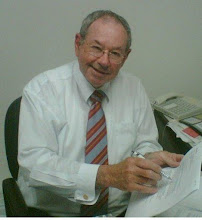
feel free to contact Bernard Kelly (right) admin@retirelaughing.com


MALAYSIA LURES RETIREES


Malaysia now appears to be the destination for choice for a growing number of retirees.

It offers the “Malaysia My Second Home” program to entice middle income retirees with a ten year renewable visa, and other benefits – such as the ability to own real estate, no tax on offshore income, and options to buy locally made cars tax free.

The appeal of south east Asia as a retirement destination is endless summers and low daily living costs.

Medical facilities, once a major worry in less developed countries, are highly regarded in Malaysia.

Malaysia offers secure land titles, a liquid market, a favourable tax regime, the ability to borrow against the property to enhance the investment return and stable government.


Applicants are expected to be financially capable of supporting themselves for ten years on this program, without the need to work and they must lodge a fixed deposit placement of RM150,000 (US$42,000).

ENCORE CAREER - TEACHING


Teaching appears to be the encore career of choice, judging from the boom in articles and studies about people taking up the challenge of public school classrooms.


“Clearly it’s not for the money,” writes Meg McConahey in the Santa Rosa Press Democrat.


“For many, it is a calling that went unheeded early in life in favor of a more lucrative career. For others, it is a chance to reconnect with a subject they once fell in love with, whether it be art, literature or history.”


The story highlights Dave Donnelly, who co-founded a successful biotech company, sold it to a Japanese corporation, and returned to his first love — teaching.


“Students are amazing. They’re funny. They have incredible insight. I write down pages of things I’ve learned from students,” the economics teacher at Sonoma Valley High School told McConahey.


Education, and teaching in particular, topped the list of desired encore careers in the MetLife Foundation/Civic Ventures Encore Career Survey of 44-70 year olds, released earlier this year.


That finding was confirmed by a survey for the Woodrow Wilson National Fellowship Foundation in Princeton, N.J., which found that 42 percent of college-educated adults ages 24 to 60 would consider teaching as a career.


“There are many people of this generation who are extremely idealistic and who came out of the spirit of all that was going on when they were growing up and had a great desire to make a difference in many different ways,” said John Gomperts, president of Civic Ventures, which publishes Encore.org.


“But a lot of people get diverted, and life intervenes and you end up being something you never thought you were going to be. And yet for some, there is a little flame that still burns with idealism and their dreams deferred.”


Sourced from encore.com 15 November 2008


PROFITABLE HOBBY – SELLING RAW PEANUTS

This hobby business would suit someone who’s already not working a full week.

If you’re ever worked in an office or factory, you will be familiar with Honesty Snacks – the mini stand of low value chocolates with an adjacent honesty box for your money.

And even more profitable hobby business (so I’m told) is to package up raw peanuts and sell them in factories.

You don’t need much equipment to get started, and raw peanuts are easy to source.

You’ll need to pack 60 grams into clear cellophane bags and arrange a fixed schedule to refill your display (and collect your money).

Pricing might be tricky – but try to sell at four times the cost of the ingredients. The rationale is one quarter for the raw materials, one quarter for wastage, one quarter for overheads, and one quarter for profit.

If customers baulk at your price, just say “unless I make a profit, I can’t provide the service”.


PROFITABLE HOBBY - SPIT ROAST CATERING

If you have had any experience in catering for a large family group, chances are that you hired a spit roast rotisserie to handle the cooking.

Now you could move on and upwards by commencing a (weekend) spit roast catering microenterprise yourself.

THE BASICS

You probably need to put a business plan down on a sheet of paper – nothing too elaborate – however it will help you to avoid mistakes.

THE PRODUCT

Let’s assume that you will start with offering “a popular value for money option suitable for all occasions” service and only on Saturday evenings.

To get you established in the marketplace, you will need to know who to target and then develop an appropriate brochure and website.

MARKETING

Basic spit roast catering is ideal for informal groups – such football and sporting clubs, community centres, and church groups.

Once you establish yourself in one of these markets, your business will expand automatically as you will know where to look for customers, and other groups will hear about you and come automatically to you.

Ideally you will need a brochure, a website, and a mobile phone.

A simple website is essential for this hobby business, as your target market will go online to search for supplies when the committee decides to have a spit roast event.

Try to obtain the mobile number 1300774877 which you promote as 1300SPITROAST. Don’t worry about the length of the name, because your phone will ring once they get to ten digits i.e. 1300SPITRO

SETUP COSTS

You’ll need to acquire a rotisserie (buy one second hand off eBay).


If you plan on a rotisserie suitable for a whole pig, lamb, or pieces of meat on the prongs or grills, you might be lucky and find one for sale for less than $1,000. Otherwise you may have to buy one from a manufacture for around $1,500.

As well you’ll need a trailer to transport it, and you’ll need to buy linen table cloths for the buffet, plus servingware, tableware and serviettes.

Plastic plates and utensils will be adequate for informal events.

And as you’ll need staff to cook, carve, serve and clean up, you will need to formalise a business structure. The cheapest form of business ownership is to register as a sole trader.

THE MENU

Start by offering only one menu - Crackled Roast Pork with Apple Sauce with say six vegetables.

Plus freshly baked breads & butter packs

Plus a choice of say three desserts.

PRICING

Spit roast business charge per person, for a minimum number.

An appropriate pricing could be $35 per person, with catering provided for a minimum 50 guests.

If anyone quibbles about the price, just say “if I don’t make a profit, I can’t provide the service” and move on to your next client.

REVENUES

With upgrades, your average revenues should come in around $2,000 of which $1000 should be profit (before you pay yourself a wage).

By your second year, you should have recovered your start-up costs, and be making true profits.

THE FUTURE

As this profitable hobby grows, you will eventually need to have access to a commercial food preparation area and kitchen, with the necessary approvals from the relevant authorities.
Don’t build this commercial kitchen into your family home, as when the time comes to move on, you won’t be able to separate the home from the business, and consequently you won’t be able to sell either.

In time, this microenterprise will have developed a repeat client base, and will be able to be sold for a tidy sum.

If you need a website to assist you with your profitable hobby, go to www.valuewebsites.info


IDEAS FOR PROFITABLE HOBBIES

If you have even only the slightest notion of what your hobby is (or could be), go to PayPal Shops to see what others in your niche are selling.

The link is
https://www.paypal.com/row/cgi-bin/webscr?cmd=_shop-ext#

As a simple example, if you have an interest in herbal remedies, go to PayPal Shops and look under “herbal remedies”.

There are hundreds of products there, each being made by a home based business and being sold for real dollars.

As you browse this online information resource, you will be able to create a list of what products you are attracted to. Then you will be able to create those which will be most appealing to customers and clients.


Coming soon: additional profitable hobbies at www.hobbiesforprofit.com

Labels: , , , , ,